

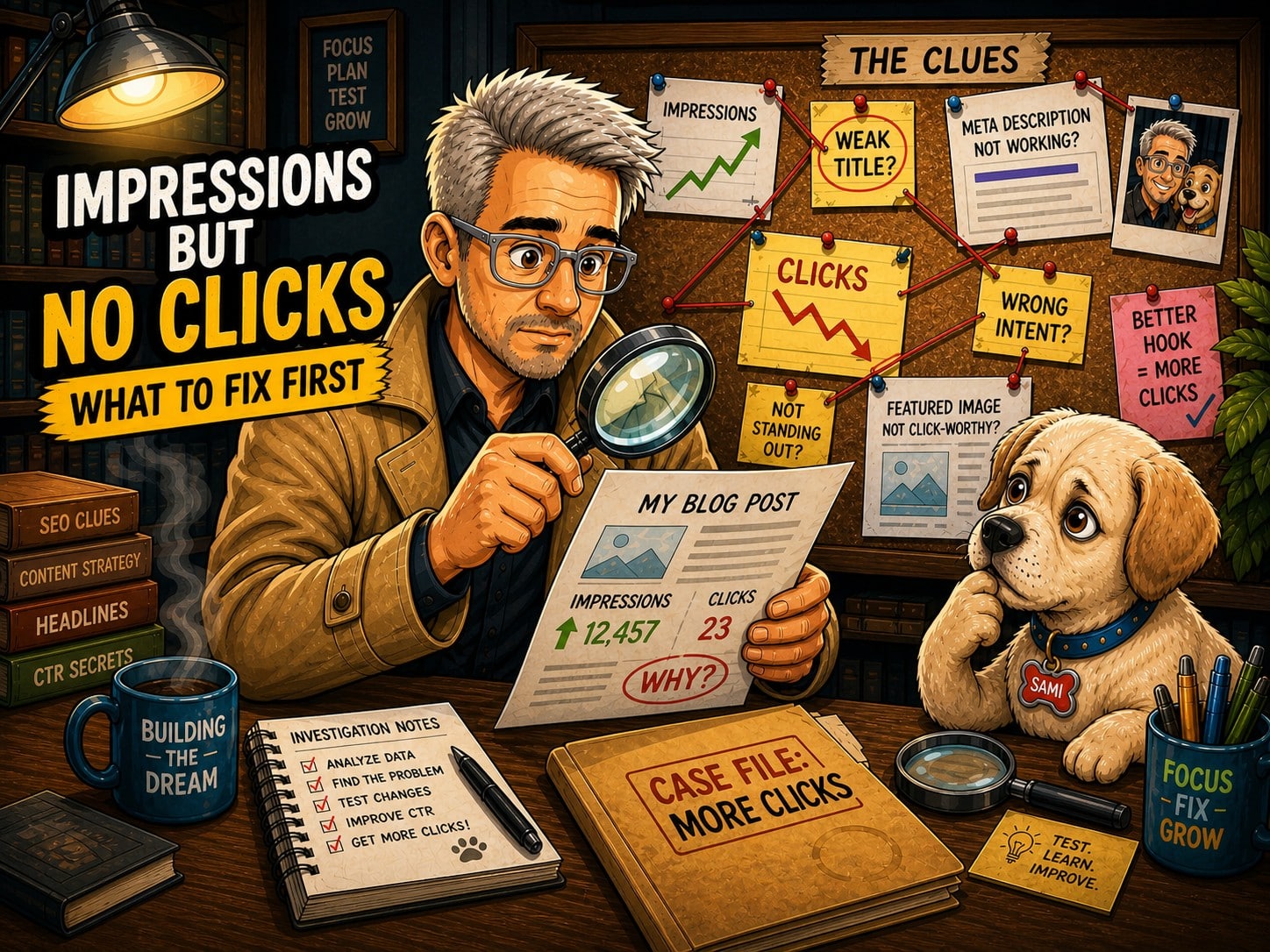
When I run across a post with impressions but no clicks, it raises a flag for me.
It’s Google’s way of saying, “I see your content… I’m just not sure it’s worth clicking yet.”
That usually means one of two things:
- The post is buried way down in the rankings
- Or the hook isn’t strong enough to get the click
I started digging into this more after seeing blog impressions with no clicks, and this is where my focus has shifted.
Sometimes It’s Just the Keyword
If your post is sitting on page 10 or beyond, there’s a good chance you’re going after a competitive keyword.
I know exactly what that feels like.
I’m trying to rank for “SEO tips for beginners,” which is about as competitive as it gets. If you’ve ever tried to rank your blog on Google, you know how tough it can be to break through.
In that case, there’s not much you can do.
Sometimes the best move is to let the post age a bit. Keep building your site, add internal links, and give Google time to figure out where you belong.
Not exciting, but it’s part of the process.
The Real Problem Is Usually the Hook
More often than not, the issue isn’t ranking.
It’s the click.
If your post is getting impressions, it means people are seeing it. Google likes it, but they’re just not choosing it.
That’s where your SEO title and meta description come in.
If those are weak, it doesn’t matter how good your content is.
It’s like going fishing with a paper clip. You can cast all day long, but nothing’s sticking.
What I Check First
When I see impressions but no clicks, I go through a quick checklist.
SEO Title
Is it clear?
Does it actually match what someone is searching for?
Does it give a reason to click?
Also, keep your SEO title tight. Around 50–60 characters is a good target. If it’s too long, Google will truncate the title, and that hurts your chances. Learning how to write blog headlines that actually get clicks can make a bigger difference here than anything else.
And yes, double-check for spelling errors. It sounds obvious, but it happens.
Meta Description
This is your pitch.
If someone sees your title and pauses, the meta description is what pushes them to click.
Does it clearly explain what they’ll get?
Does it sound like something worth reading?
Would you click on it?
If the answer is no, then I would rewrite it.
Internal Links
This one often gets overlooked. I usually link to at least three of my relevant blog posts. Sometimes more.
If your post isn’t connected to anything else on your site, it’s harder for Google to understand its value.
Link to it from other relevant posts.
Give it some context.
You’re basically helping Google say, “Okay, this page matters.”
Let’s Wrap This Up
Impressions without clicks aren’t a bad thing.
They’re actually a signal.
Google is testing your content. It’s giving you a shot.
Now it’s your job to make that first impression count, to make that hook set.
Tighten up the title. Strengthen the meta description. Make it something people want to click.
Because once they start clicking, everything else gets easier.
If you’ve run into this on your own site, I’d be curious what you found. Was it the title? The keyword? Something else?
Drop a comment and let me know. I respond to ALL comments.
Have you checked out my Building the Dream series yet? This is where I share the real numbers behind this blog, what’s working, what’s not, and what I’m adjusting along the way. If you want to see how this actually plays out over time, Building the Dream is the place to start.

About the Author: Dan Swords
Dan Swords is a writer, blogger, and content creator with more than 35 years of professional technical writing experience and over 13 years creating content for the web. Through danswords.com, he shares practical advice to help aspiring bloggers and creators get their ideas online. His focus is simple: helping people start and grow a blog with clear writing, engaging content, and practical strategies that actually work.