

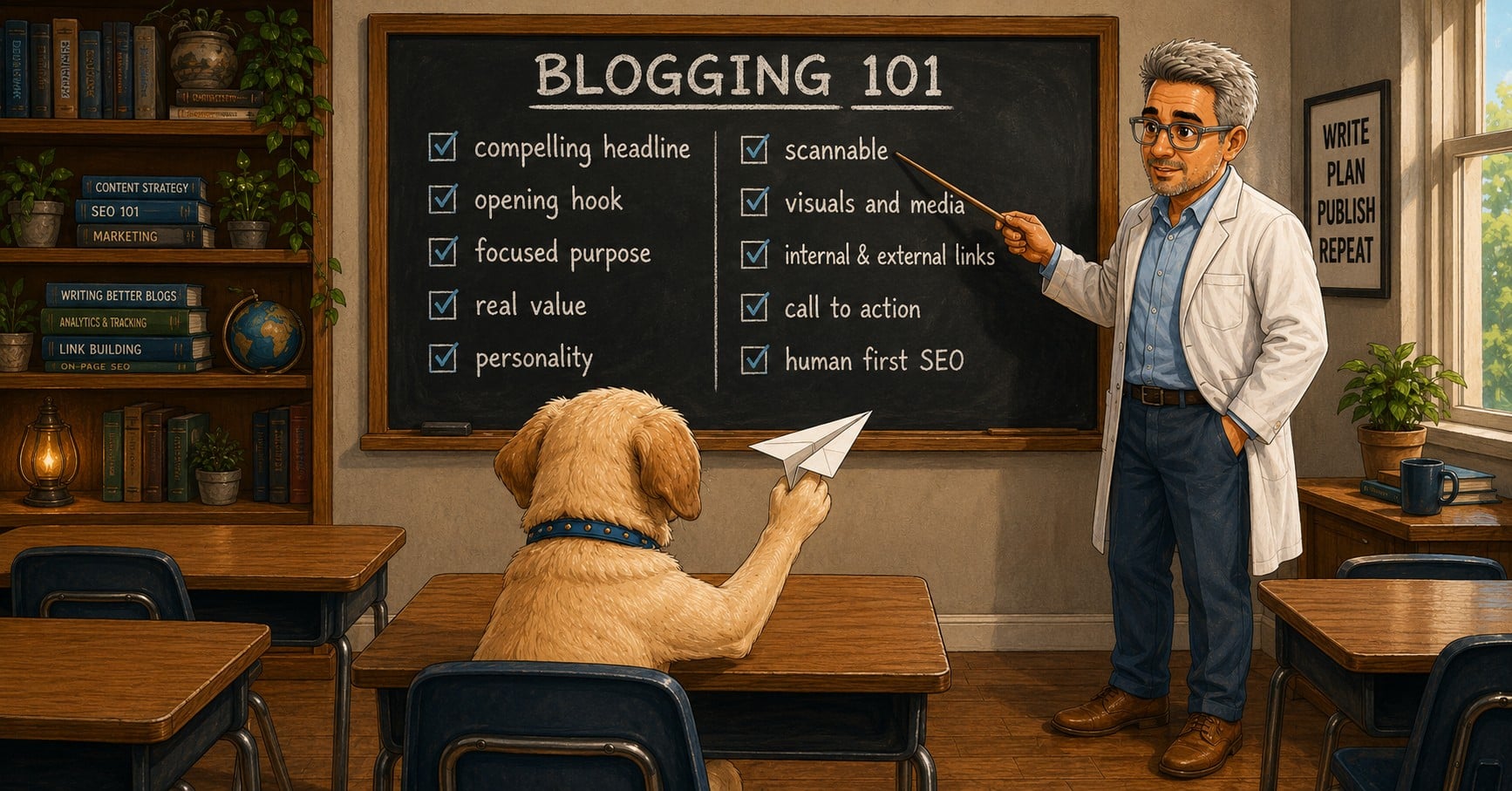
Let’s be honest: we’ve all clicked on a blog post that promised the moon but it delivered a soggy sandwich. Whether you’re writing for a business or building a personal brand, understanding the qualities of a great blog post is what separates a trusted authority from the noise. If you want people to actually read, remember, and share your content, then you need more than just words on a page—you need a strategy.
When looking at the essential characteristics of a blog through the lens of my 40 years in the communication industry, these 10 qualities stand out as the pillars of a successful post.
The Secret Sauce: Understanding Google’s E-E-A-T
Before we dive into the 10 qualities, we need to talk about E-E-A-T. This stands for Experience, Expertise, Authoritativeness, and Trustworthiness.
Google isn’t looking for robotic content anymore; it’s looking for human perspective. As a creator with over 13 years in the trenches, I’ve seen that the best posts are the ones where your real-life Experience leads the way. When you write from a place of authority, you don’t just “rank in Google”—you build a community of people who actually trust what you have to say.
Experience: This is your strongest asset. It refers to the creator’s first-hand or life experience with the topic. Google added this second “E” in 2022 to reward people who have actually “walked the walk.”
Expertise: This refers to the knowledge or skill of the content creator. While Experience is about doing, Expertise is about knowing the technical depth of your craft (like my background as a technical writer or freelance travel writer).
Authoritativeness: This is about your reputation. It measures the extent to which you or your website is recognized as a go-to source for the topic.
Trustworthiness: This is the most important part of the framework. It’s the “glue” that holds it all together. Google looks for accuracy, transparency, and safety to ensure the reader can rely on what you’re saying.
Understanding E-E-A-T and how it shapes the qualities of a great blog post can improve your content overall, which may help avoid issues like Page is not indexed: Crawled – currently not indexed and improve your chances of being found in Google.

1. The Handshake: A Compelling Headline (A Key Blog Characteristic)
Your title is your first—and sometimes only—shot at grabbing attention. It needs to be clear, catchy, and just click-worthy enough to spark curiosity without sliding into clickbait territory. A great title acts as a handshake; make it strong, professional, and memorable.
2. The Pull: An Opening That Hooks
The first paragraph should make people say, “Yeah, I’m sticking around.” Lead with a bold question, a surprising stat, or a relatable moment. Set the tone immediately and make it clear why this post is worth their time.
For example, many creators get stuck before they even start because they don’t know what to talk about. If I’m writing about creative blocks, I might hook my readers by solving that problem immediately with a resource like my list of video ideas for creators over 50. When you provide an instant “win” in your opening, you prove to your audience that your content is valuable and worth the read.
3. The Map: A Clear and Focused Purpose
No one likes wandering through a blog with no map. Your reader should know exactly what they will get by the end of the post. A clear purpose keeps your writing focused and your reader grounded in the value you’re providing.
4. The Solution: Content That Provides Real Value
Readers want practical takeaways. Give them tips, examples, and real-life experiences they can apply right away. The more useful your content, the more likely it is to build the trust that keeps people coming back.
One of the best ways to provide lasting value is by focusing on evergreen content. Unlike news or trends that fade quickly, evergreen posts remain relevant for years, helping you build a library of resources that continues to inspire your audience long after the initial post date.
5. The Voice: Let Your Personality Shine
Don’t write like a technical manual unless you are one. People come for the info, but they stay for the voice. Personality builds trust and keeps readers engaged. Your “human-ness” is what makes the content memorable in a sea of AI-generated fluff.
Don’t overthink it. As Gary Vaynerchuk famously suggests, you should document, don’t create. Let your personality shine by simply showing the work you are already doing.
6. The Scan: Scannable Structure and Formatting
Readers scan before they read. Use subheadings, bullet points, and short paragraphs to make the “good stuff” easy to find. Whitespace is your friend; don’t let your content feel like a wall of text.
7. The Pop: Strategic Visuals and Media
Visuals aren’t just for aesthetics; they break up text and explain complex ideas. Whether it’s a screenshot, a custom graphic, or a relevant photo, images help “show” the message when words aren’t enough.
8. The Connect: Smart Internal and External Links
Internal links keep people on your site longer, while external links to credible sources prove you’ve done your homework. Think of links as a concierge helping your reader find even more value.
Anchor Text
As a rule of thumb, I aim for at least five internal links and two relevant external links in most blog posts. But here’s the important part:
Don’t just drop a random word into a hyperlink.
The clickable text, known as anchor text, should clearly describe what the reader will find when they click.
Instead of writing:
Click here to learn more.
Write something specific like:
Read my guide on how to structure a blog post for better engagement.
That helps in three ways:
- Readers know exactly what to expect.
- Search engines understand what the linked page is about.
- Your content feels intentional instead of scattered.
Avoid vague anchors like:
- click here
- this article
- learn more
Use descriptive phrases that relate to the topic of the linked page.
For internal links, try to match the main keyword or theme of the page you’re linking to. For external links, connect to reputable sources that support or strengthen your point.
Thoughtful anchor text improves clarity, strengthens topical authority, and makes your blog post more useful.
9. The Closer: A Strong Call to Action
Don’t let your post fizzle out. End with a clear “next step.” Whether you want them to comment, share, or read a related post, that little nudge turns a passive reader into an active member of your community.
10. The Signal: Natural, Human-First SEO
Keywords help search engines understand your content, but they shouldn’t make your writing clunky. Focus on helping humans first by answering real questions. If you provide value, Google’s algorithms will follow.
Google’s search quality guidelines now specifically reward Experience (E-E-A-T). Your years of perspective aren’t just a personal asset—they are a technical one that helps you rank.

How Great Blog Posts Perform After They’re Published
Writing a great blog post is only part of the equation. What separates strong content from forgettable content is what happens after it goes live.
A truly great blog post continues working long after the publish date.
Here’s how.
It Attracts Search Traffic Over Time
Great blog posts are written with clarity and purpose. They answer specific questions readers are actively searching for.
Instead of chasing trends, focus on evergreen topics that are clickable, engaging, and keeps your reader interested. That means the post continues to bring in traffic months or even years after publication.
If a blog post stops being relevant the week after it’s published, it may not have been structured for long-term value.
Great content compounds.
It Encourages Readers to Stay Longer
Engagement matters.
When a blog post is structured well, easy to read, and genuinely helpful, readers spend more time on the page.
They scroll.
They read sections fully.
They click related internal links.
That tells search engines the content is satisfying user intent.
A great blog post doesn’t just attract clicks. It holds attention.
It Gets Shared and Referenced
Strong blog posts don’t just sit quietly on your site. They get shared in newsletters, on social platforms, and sometimes linked to by other writers.
Why?
Because they feel complete. They provide clarity. They become something people reference when explaining a concept.
If your post clearly explains the qualities of a great blog post, it can become a resource others point to.
That’s when authority builds.
It Builds Trust With Your Audience
Readers remember helpful content.
When someone finishes reading your post and feels informed rather than confused, they’re more likely to return to your site.
Trust is built when:
- Advice is practical
- Ideas are explained clearly
- The writing feels intentional
A great blog post isn’t just about ranking. It’s about credibility.
It Improves Over Time
One overlooked quality of a great blog post is that it evolves.
You update it.
You expand it.
You refine examples.
You add new insights.
Great content isn’t static.
Revisiting and improving strong posts sends positive freshness signals to search engines and strengthens topical authority.
Let’s Wrap This Up: Qualities of a Great Blog Post
When looking at the essential characteristics of a blog, these 10 qualities are what define a successful post. It isn’t about a secret formula; it’s about showing up with purpose, personality, and a plan. If you focus on structure and value, you’re already ahead of most creators.
I’d love to hear from you: Which of these 10 qualities do you struggle with the most? Let’s talk about it in the comments below.
FAQ: Writing Blog Posts That Drive Results
What are the core qualities of a great blog post?
A great blog post consists of a compelling headline, a strong hook, scannable formatting, and original value that solves a reader’s problem while showcasing the author’s unique voice.
How do you make a blog post stand out in 2026?
To stand out, move away from generic content and focus on personality and documentation. Use clear sub-headings, strategic visuals, and a strong call to action to keep the reader engaged.
Out of these 10 qualities, which one do you think you’re missing right now? Or which one has made the biggest difference for you? Leave a comment—I’m curious what’s actually working for you.
I’m still creating, experimenting, and figuring out what works at 63. In Why I’m Still Creating Content at 63, I share why I keep going and what content creation looks like for me today.

About the Author: Dan Swords
Dan Swords is a writer, blogger, and content creator with more than 35 years of professional technical writing experience and over 13 years creating content for the web. Through danswords.com, he shares practical advice to help aspiring bloggers and creators get their ideas online. His focus is simple: helping people start and grow a blog with clear writing, engaging content, and practical strategies that actually work.
This post really resonates, especially with how much AI-generated content is flooding the internet right now. When so many posts sound polished but generic, voice becomes the differentiator. Your point about “human-ness” being the advantage feels more relevant than ever. Thanks for sharing!
Wow!! Thank you. Such a nice compliment. I’m glad you enjoyed the post. Come back again, there’s more on the way.
Great article?? Would like to see more.
Thank you. I’m glad you liked the post. Come back again, there’s more new stuff on the way.