

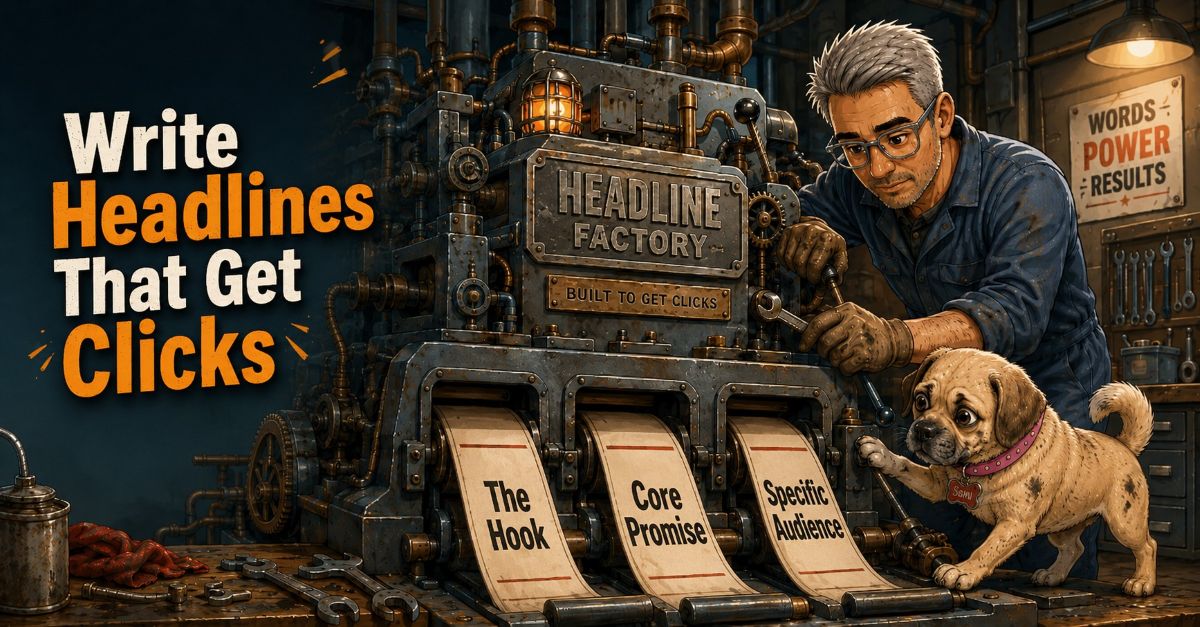
Let’s be honest. Most people decide whether to read your post based on your headline alone. You could write the most helpful, well-researched article on the internet, but if you don’t understand how to write blog headlines, your hard work won’t get the attention it deserves.
That’s the power of a first impression. If your title doesn’t land, the reader moves on. But here is the secret: you don’t need to be a marketing “guru” or a 20-year-old social media wizard to see results. Writing blog headlines that get clicks isn’t rocket science—it’s a repeatable skill.
I’ve spent years refining how to communicate clearly without the fluff. Here are the simple, honest strategies I use to create headlines that encourage readers to click.
Why Clarity is the Key to Great Blog Headlines
In the world of content creation, clarity beats cleverness almost every time. You don’t need to be a poet or a marketing “guru.” You just need to be crystal clear about the value you are providing. The reader should never have to guess what they’re getting before they click.
Compare these two headlines:
- “A Few Thoughts on Blogging”
- “How to Start a Blog and Get Your First 100 Visitors”
Which one would you click on?
The first one is a mystery; the second is a solution. Your readers are busy people. They are looking for answers, not riddles. A good headline should quickly answer the most important question: “What’s in it for me?”
If your post offers a tutorial, a list, or a solution to a specific problem, say so directly. Using plain, honest English isn’t just easier to write—it’s the most effective way to build trust with your audience.
Use Numbers to Provide Structure and Clarity
There’s a reason list-style headlines are so popular. They are easy to scan and set clear expectations. When a reader sees a number, they know exactly what they’re getting into.
Think about headlines like:
- “5 Tools Every Blogger Should Know About”
- “10 Easy Ways to Get More Traffic to Your Blog”
A number tells the reader that the post is organized and manageable. It promises structure, which is comforting in a world of endless information. Often, that promise of a quick, organized read is enough to earn the click.
However, honesty is more important than the number itself. Only use a number if it fits your content. If you have three great points to make, don’t stretch them into ten just to make the list look longer. Fluff only weakens your message and loses the reader’s trust.
My Personal Rule: I prefer using odd numbers and usually keep the list under 10 items. If I have a bit more value to share, I like to add an “extra tip” at the end rather than padding the main list.
Build Trust by Making a Promise You Can Keep
Fluff words are the Styrofoam peanuts of the headline world: lightweight, space-wasting, and utterly useless. This is where a lot of bloggers go wrong. They promise the moon in the headline, but the actual post barely gets off the ground.
While clickbait headlines might get that first click, they rarely get the second. If you want people to return to your site, you have to build trust, and that starts with being honest from the very first word.
Don’t write “The Ultimate Guide to SEO” unless the post is truly comprehensive. If you’re offering a few quick pointers, don’t label it as “Everything You Need to Know.” Instead, match your headline to the actual value you are providing. When you are honest about your content, you demonstrate the qualities of a great blog post that respects the reader’s time and intelligence.
If your post helps beginners, say so. If it covers one narrow topic, be specific about that too. A solid example would be: “7 Simple SEO Tips for Beginners.” This headline sets the tone and provides value without trying to oversell.
Cut the Filler Words to Strengthen Your Message
In my years of writing, I’ve learned that “more” isn’t always “better.” Words like “very,” “really,” “just,” and “actually” rarely help a headline. Instead, they take up valuable space and weaken the punch of your message.
To make your headlines more impactful, try cutting the fluff:
Before: “The Very Real and Actually Important Reasons Why Just Posting Some Imperfect Content Is Really Much Better Than Not Posting Anything At All”
After: “7 Reasons Posting Imperfect Content Is Better Than Posting Nothing“
The second version is cleaner, stronger, and more direct. It gets straight to the point without trying to “convince” the reader with extra adjectives.
Every word in your headline should earn its place. If a word isn’t adding specific meaning or value to the sentence, delete it. A lean, purposeful headline shows your readers that you value their time and helps you build the kind of evergreen content that matters to your audience for years to come.
Use Proven Headline Formulas to Save Time
There are headline formats that have stood the test of time for a reason: they work. You don’t need to reinvent the wheel every time you sit down to write. Using a template isn’t “cheating”—it’s a smart way to communicate value quickly.
Here are a few of my go-to formulas:
- “How to [Do Something] Without [Something Painful]” Example: How to Write Blog Posts Without Burning Out
- “[Number] Ways to [Get a Benefit]” Example: 10 Ways to Attract More Readers to Your Blog
- “What Every [Audience] Should Know About [Topic]” Example: What Every New Blogger Should Know About Headlines
These templates speak directly to the reader’s needs and promise immediate value. When you aren’t sure where to start, using a proven structure can help you build momentum online, especially on those days when traffic is low and you need a clear way to shape your message.
Just remember to tailor these formulas to your actual content. The goal isn’t to be a “template” creator; the goal is to use these structures to share your unique voice more effectively.
Final Thoughts
If you want more readers, better engagement, and stronger blog performance, it all starts with your headlines. They are the bridge between your hard work and your future audience.
As we’ve covered, a good headline succeeds when:
- It’s clear: The reader knows exactly what they are getting.
- It promises something specific: No vague “thoughts,” just real solutions.
- It matches your tone: Your headline should feel like the rest of your post.
- It uses purposeful words: Every word earns its place on the page.
Writing headlines is a skill. Like any other craft, it improves with practice. Don’t stress if it doesn’t feel natural at first. Try different versions, test them out, and keep an eye on what resonates with your readers.
At the end of the day, you don’t need to be flashy or “market-y.” You just need to be helpful and honest. Do that, and your headlines will do the job they were meant to do: bring readers in and start a conversation.
Your Turn
The next time you write a blog post, try a few different headline versions before you publish. Then ask yourself which one is the clearest, most specific, and most honest about what the reader will get.
What headline are you working on right now? Leave it in the comments and tell me what you are struggling with. I read every comment, and I may be able to help you make it stronger.

About the Author: Dan Swords
Dan Swords is a writer, blogger, and content creator with more than 35 years of professional technical writing experience and over 13 years creating content for the web. Through danswords.com, he shares practical advice to help aspiring bloggers and creators get their ideas online. His focus is simple: helping people start and grow a blog with clear writing, engaging content, and practical strategies that actually work.